Advent 1
Jeremiah 23:5-8; Romans 13:8-14; Matthew 21:1-9
✠ In the name of the Father and of the Son and of the Holy Spirit ✠
Why do we need the Advent season? Why does the Church insist that we hold off on the Christmas stuff for a bit, that we can’t just do things the way the world does? Why do we instead begin with this season of watchfulness and repentance, of patient waiting and love toward the neighbor? And why is there an increased emphasis on the struggle against the flesh–like we heard in today’s epistle: “Let us walk properly as in the daytime, not in orgies and drunkenness, not in sexual immorality and sensuality, not in quarreling and jealousy. But put on the Lord Jesus Christ and make no provision for the flesh, to gratify its desires.” Why not just immediately give in to all the feel-good stuff instead of this more serious tone?
Today’s Collect points us to the reason. We ask in that prayer that our Lord would stir up His power and come and save us from the threatening perils of our sin. We need Advent before Christmas because we too easily forget why Christ came to be born among us: to rescue us from the grave danger that our sin poses. We forget that God hates sin. We forget that the only real joy that is possible in this age is repentant joy that humbly trusts in His mercy.
God hates sin not simply because it’s an act of rebellion against Him or because it offends His holiness. No, He who is Love Himself hates sin with all of His being especially because of what it does to the creatures whom He loves. Our self-absorbed sin can’t do any damage to His nature; but it can and does to ours. That’s something He doesn’t want to happen; that goes against His good and gracious will for us. God despises sin because it gravely endangers each of us and those whom we hurt in the process. Whether the sins are little or big, they do real damage. They dehumanize us, and therefore they cut us off from our Maker in whose image we were originally made. If we can recognize that honestly again, we will see why we need Advent.
Each season of penitence observed in the Church is observed with one goal in mind: to make you discontent with your life as it now is; to show you that there is so much more that your life is created to be in Christ; to stir up in you a hunger and thirst for change–and not just change out there or in others, but change inside of you. Instead of settling for what always has been, the Church wants to draw you by the Holy Spirit’s power to set your hearts on and to reach for and hope for what may yet come to be.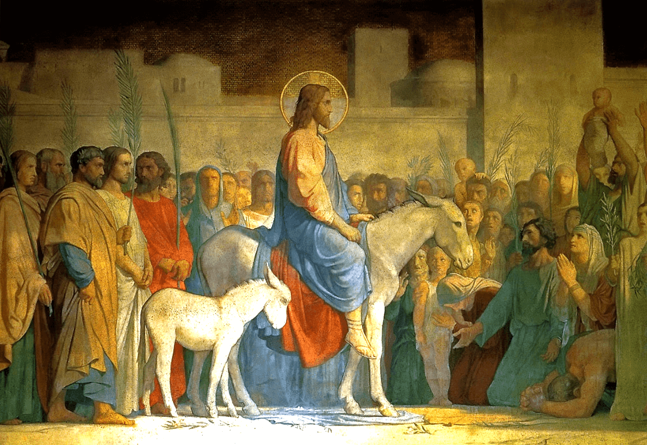
That’s why St. Paul’s epistle today begins by telling us that it’s time to wake up from our spiritual drowsiness that is willing to go along with the way things are. “Salvation is nearer now than when we first believed,” he says. It’s getting closer and closer, just around the corner. Let that stir up your hearts to a penitent faith and a renewed hope.
And let it create in you a desire to be rid of the works of darkness. You know what they are. You only have to consider the things you do that you want no one to see, that you want covered in darkness. You have only to consider the things you think, that you would never want to be exposed to the light of day. You only have to consider the things you crave and desire, that you hope can be kept in the shadows and out of view. These are the works of darkness that St. Paul urges us all to cast off–dumping them from our lives and instead moving into the realm of the daytime, of Christ’s light. The key is always to put on Christ and to make no provision for the flesh to fulfill its passions.
That is why we have Advent as a time of prayer and watchfulness, a time of devotion to God’s Word, a time for acts of love. These things are gifts of the Spirit to crucify the flesh with its constant demands of putting the self first. Advent comes as liberation from slavery to the old Adam; it comes as a gift of the Spirit who enables us to live in Christ, to live as new men and women–no longer slaves, but free.
But how does that work? How does that actually happen? We’ve tried the path of will power. We know how far we get when it depends on our self-control, how long New Year’s resolutions generally last. No, the answer comes in a way that is paradoxical and counterintuitive. The answer is not in asserting your own will power, but putting your will to death. It’s not merely about curbing your desires but crucifying them with Christ, going back to your baptism and drowning them through repentance, and then putting on the new man, the Lord Jesus Christ, growing into Him and learning how to desire what He desires.
The Scriptures set a mystery before us today. They show us Jesus, entering into Jerusalem as King, riding on a donkey colt. The Gospel of Luke says that this colt had never been ridden before. Do you see what that means? What you could never do to tame the beast that is your flesh, Jesus can and does do. Imagine how it would ordinarily go, trying to ride a stubborn donkey for the first time, the struggle that would normally be. But here Jesus rides this beast never before ridden, and it does His bidding. It carries Him in to His City where He will not only be greeted as King, but where He will give His life as the ransom that will set His people free. What we could never do in the conquering of our own flesh, Jesus Christ can and does do. Our Lord always prayed “Thy will be done,” even when that will of the Father brought Him to Jerusalem to die as King upon a cross. Jesus can do in you what you could never do on your own.
Martin Luther once reminded his hearers that we are not only those shouting Hosanna; we are also and especially the donkey. We are made to be ridden, to live under the authority of one who rules over us. There is a throne in our heart that is going to be occupied by someone. And there are only two options: either Satan is ruling and riding us and taking us off the path to our own destruction. Or Jesus is riding us and reigning over us, so that we follow the narrow way of the cross, walking safely through the darkness of this world to the light of the resurrection of the body and the life of the world to come. By virtue of the penitent faith that the Holy Spirit works in you, you are all made to be Christ-bearers like that donkey colt.
And note that there are actually two donkeys that Jesus rides, an older one, the mother, and a younger one, a colt, the mother’s foal. These two donkeys represent God’s Old and New Testament people. First, Jesus rides the old, to show that He is the fulfillment of all that Israel was about and all that its prophets foretold. Then Jesus rides the new, which is born from the old, the new Israel, which is the church. Our Lord comes to make all things new by dying and rising again. Out of the old order of death comes a new order of invincible life for us in Jesus. He unites all believers, from the Old Testament and the New, from every nation and race, together as His true and everlasting Israel.
On that first Palm Sunday as Jesus rode into town, and as they sang their Hosannas to Him, they most likely had it wrong about what He was coming to do. They were thinking that political freedom from the Romans would be a good goal for the Messiah. But Jesus was thinking that freedom from their sin would be much better. And that’s why the throne of King Jesus ended up being made of wood and His crown made of thorns, and His life offered as the sacrifice that atoned for the sin of the world. The enemies Christ came to defeat were bigger by far than anything His people imagined. So it is also for you.
This is why we have Advent, because the only life worth living is the life where Christ is the one riding the donkey–where He puts our sinful flesh to death and so sets us free from being slaves to our own appetites and desires, and where He keeps us on the path of eternal life. We donkeys need a gracious Master like Jesus. And that is just what He has come to be. He is born in Bethlehem, laid in the donkey’s feeder, in order to be the bread of life for the world. We need Him, for He alone can bring us forgiveness for all our sins. He alone can wipe them out and break the chains that hold us in bondage and give to us the true freedom of life with Him. And each Advent the Church proclaims not only that He can do this, but that He fervently wants to do this, that it is His earnest desire to accomplish this for you.
Proof of that is given to you here in the Holy Sacrament. As the Lord comes to you anew at the altar today, you are given joyfully to cry out to Him the ancient song: “Hosanna!” which means, “Save us now, O Lord!” “Set us free from our sin! Save us and be Yourself our Righteousness.” Zechariah the prophet declares it, “Behold your King is coming to you! He is righteous and having salvation,” your salvation.
✠ In the name of the Father and of the Son and of the Holy Spirit ✠
(With thanks to the Rev. William Weedon)